

05 Jun 2026 | Dr. Elmar Ludwig, Claudia Gratz, Malte Jädicke
Experience report F.O.T.T.® Ground Course
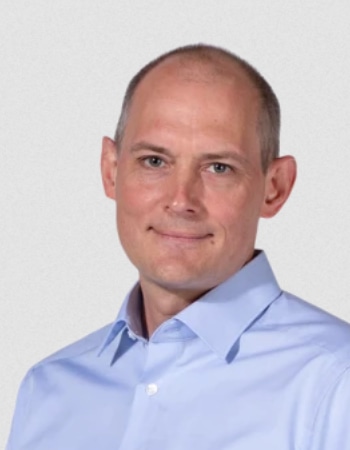
Dr. Elmar Ludwig is a dentist in Ulm and serves, among other roles, as the representative for seniors and people with disabilities for the Tübingen District Dental Association within the Ulm Regional Association.
In addition, he serves on the board of the non-profit association mund‑pflege e.V. and has received multiple awards for his commitment to providing dental care to vulnerable groups, particularly in geriatric and inclusive dentistry.
In April, he participated as a course attendee, and the first dentist ever to do so, in a F.O.T.T.® Ground Course held at the Burgau Therapy Centre.
Here is his lively experience report on the week of April 13th to 17th, 2026, with additional impressions of the two instructors, Claudia Gratz and Malte Jädicke.
'WOW ... every dentist should know this!' says a dentist after completing the F.O.T.T.® Ground Course in Burgau
I’m absolutely thrilled! The F.O.T.T.® concept is impressive and well-thought-out. From start to finish, the course was a fantastic mix of theory, self-awareness exercises, peer practice sessions, and working with patients from the rehab-center.
The course week
'Know the normal' - even the introduction on the first day, with its focus on postural control, was a real eye-opener: alignment with pelvic stability, trunk control, head control, and jaw stability, along with postural adjustments using both feedforward and feedback, not to mention facilitation—all of which serve as important foundations for a better understanding of disease-related limitations.
'The environment provides stability' - a brilliant and highly versatile concept: using aids to support posture in order to facilitate breathing, speaking, and, above all, swallowing.
'Implicit learning' - understanding diagnosis and treatment as a single unit, clearly and comprehensibly demonstrated using the example of sitting freely, and then practiced by the participants.
Then the bite into the apple. Everything that has to happen for something that seems so simple. The gaze that later breaks away. The arm, the hand that reaches out and guides the apple to the mouth. The mouth opening and the lips making contact. Biting, chewing, and swallowing. How the processes interlock here - sometimes the head in a neutral position, sometimes tilted forward. And how everything is different when the apple is offered to the mouth by somebody else's hand from the front or from the side above. What a great day.
The next morning, at breakfast, we had water, coffee, and cake - all while dealing with hemiparesis and tetraparesis. The uncertainty and helplessness of just trying to manage somehow, without spilling anything or choking. And always keeping in mind: we are just 'role-playing' but the patients are truly affected. Afterwards, we excitedly made our first contact with our patients. The first words, the first smiles, and quickly the ice was broken.
All the groups were eager and curious to explore and discover resources. Using tablets, we were able to document important moments with photos and videos. Reflecting on the experience, the jaw control grip, free head mobility, and thoughts on the everyday functions of the face marked the end of this second day full of exciting impressions.
On the third day, the program focused on methods for examining the mouth. Facilitation of the facial muscles. Facilitation of the tongue, including speech exercises - the 'N-G' test - to assess tongue mobility for swallowing. And once again, we did practical exercises right away - first with each other and then with our dear patients. That’s how lasting impressions are made!
After the lunch break, the focus remained on the facio-oral tract. The jaw, tongue, hyoid bone, and how the muscles and nerves work together. Indirect and direct support of swallowing used to stimulate the process from the 'outside' were very interesting - this third day was simply wonderful too!
But what good is swallowing if a person can’t breathe? Consequently, Thursday’s session focused on breathing - abdominal and thoracic. Primary and secondary respiratory muscles. Punctum fixum, punctum stabile - the anatomy, attachment, and function of the diaphragm and the intercostal muscles. What is the relationship between inhalation and exhalation, and what does this have to do with flexion and extension? How can breathing be facilitated in the side-lying, and what potential compensations must be kept in mind?
The next focus was on therapeutic eating. A piece of peeled apple wrapped in gauze and then eating applesauce. Starting oral intake and assisted eating must be faciliated and (re)learned. And drinking - whether with a straw or sipping from a spoon - is yet another matter entirely. And again, first demonstrated, then practiced with each other, and finally reinforced together with our patients.
Last but not least, therapeutic oral care is essential. Facilitation and elicitation using a toothbrush or a large piece of gauze elegantly wrapped around the finger. Simple, effective, and ingenious all at once. Bravo!
The final day began with additional insights and guidance on therapeutic oral care. What do I do if the patient’s mouth won’t open? And perhaps even more importantly, the initial question: Why won’t the mouth open in the first place? What tools can be useful when cooperation is limited? Spatulas taped and wrapped in a glove. Along with impressive and well-thought-out techniques to avoid injuring oneself or others while attempting to gain access to the mouth respectfully.
The rest of the day was devoted to reflection. Once again, we took the opportunity to look back with our patients on the journey we’d taken and what we’d achieved. 'Shaping' and 'clinical reasoning' - we reflected on progress, gathered impressions, and discussed helpful interventions. At the end, all groups presented their patients. Using the photos and videos, we shared observations, outlined specific challenges, and presented the ideas that emerged.
Summary
This week was wonderful, and so was the group, which followed Claudia Gratz and Malte Jädicke's presentations with openness, seriousness, and a consistently constructive and creative spirit. Questions were asked diligently and answered thoughtfully. Everyone participated with great enthusiasm and curiosity from the very beginning and throughout the entire week.
A huge thank you to Claudia Gratz, Malte Jädicke, the wonderful group, and the entire team at Burgau Therapy Centre.
When I was studying dentistry, the topic of swallowing disorders never came up and wasn’t considered important at the time - and, incidentally, that hasn’t really changed to this day. Through my long-standing oncology clinic and intensive work with people in need of support, I have been treating people with swallowing disorders on a daily basis for over 25 years and have engaged deeply with the topic over the years.
This course has opened my eyes (even further) in so many ways, made me even more aware of the issue, and simply provided me with many new insights. I have great respect for this and offer my heartfelt thanks.
I would now like to deepen my knowledge further and, above all, share this experience with my profession. Every dentist and all staff members in dental practices should know more about F.O.T.T.®, swallowing, and swallowing disorders.
Additional remarks by Claudia Gratz and Malte Jädicke
A dentist who not only focuses on his daily practice but also actively participates in a F.O.T.T.® Ground Course demonstrates a particular openness to continuing education and interdisciplinary work. It was especially impressive that he also provided dental treatment to two course patients during the program.
One of the women arrived at the course without her upper denture. A visual examination of her mouth quickly revealed the cause: a painful pressure sore caused by the denture's improper fit.
Elmar Ludwig showed up on the next day of the course with his portable dental kit and, with professional care, filed down the woman’s dentures until they fit properly again.
Another patient in the course complained of a strange sensation in her back molar. Since we couldn’t quite pinpoint the cause, Elmar Ludwig stepped in and removed some troublesome tartar that had formed in a hard-to-see spot.
After the course ended, Elmar Ludwig made a point of visiting the lady with the tartar again on the ward to check on her well-being. In the process, he removed some more tartar.
For both patients, this was not only a personal relief in their daily lives but also crucial for their long-term oral health.
Moments like these demonstrate how continuing education and practical assistance intertwine to create real added value. It was very impressive to us - and so rare - to see someone in a learning situation additionally and selflessly providing specialized medical treatment to patients. This level of commitment not only deserves great recognition but also sends a strong message for the field of dentistry.
Association mund‑pflege e.V.
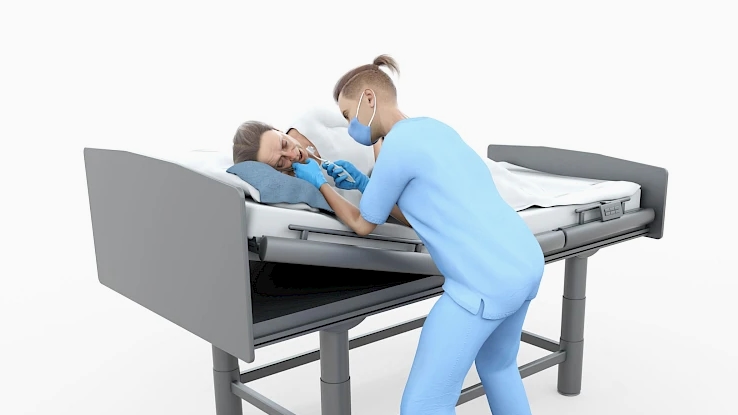

On the last day of the course, Elmar Ludwig introduced the group to mund-pflege.net the information, counseling, and training platform run by the mund‑pflege e.V. association.
The site offers in-depth knowledge, practical guidance and up-to-date advice on oral care, supplemented by clear illustrations (see example), photos, videos and interactive content.
We highly recommend it to anyone interested in oral health in general, and oral health for people with special needs in particular.